
Train for Consistency, Not Speed
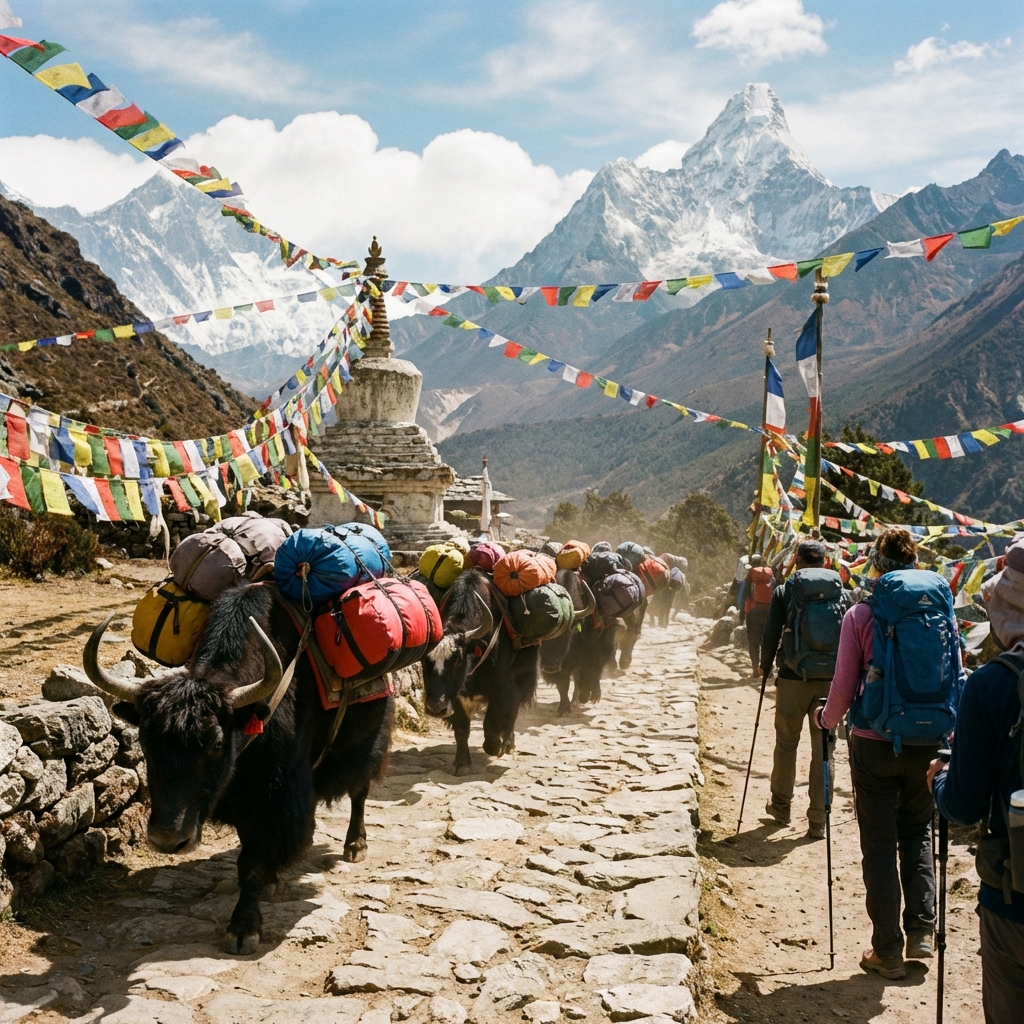
Everest Base Camp is rarely about explosive fitness. It rewards people who can walk steadily for many hours, recover overnight, and repeat that rhythm for almost two weeks.
The most useful preparation combines hiking, stair or hill work, lower-body strength, and time carrying the same daypack weight you expect to use in Nepal.
Respect Altitude Early
The challenge on EBC is altitude as much as distance. Good preparation means understanding acclimatization, hydration, sleep quality, and the signs that tell you to slow down or descend.
Trekkers often over-focus on summit-style toughness and under-focus on pacing. On this route, disciplined restraint is often what gets you to base camp feeling strong.
Dial in the Gear Before You Fly
The best EBC packing decisions are the boring ones that prevent problems later: broken-in boots, a dependable layering system, warm gloves, a good sleeping bag, and a realistic charging plan.
You do not need the biggest gear list, but you do need the right items for cold mornings, variable wind, dry air, and repeated days above 4,000 meters.
Build Margin Into Your Schedule
Preparation also means planning for uncertainty. Lukla flights shift, weather changes quickly, and acclimatization days should never feel optional.
The trekkers who enjoy EBC most are usually the ones who arrive in Nepal with a plan, but not such a tight one that every small delay becomes a crisis.